Keepers of the Unrecorded: The Latin American Archivists Who Saved Art History From Oblivion
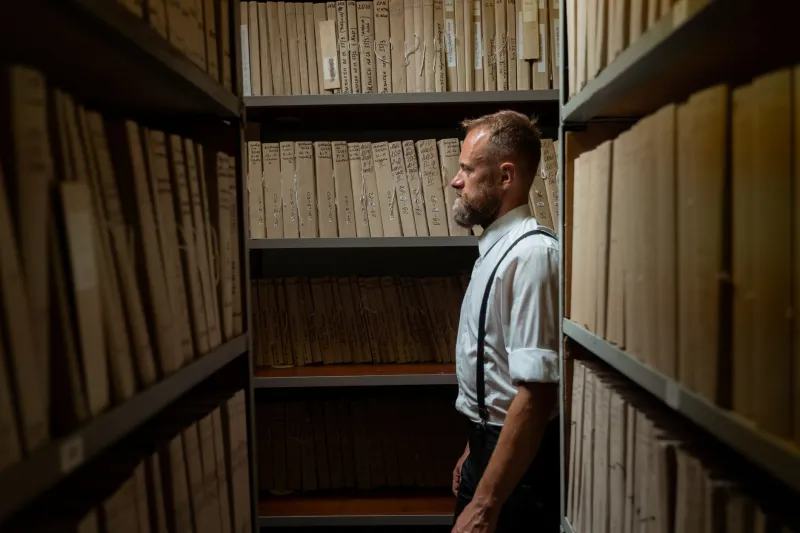
There is a particular kind of heroism that does not announce itself. It does not hang in gallery windows or collect prizes at international biennials. It lives instead in acid-free folders, in carefully labeled reel-to-reel recordings, in handwritten indices typed and retyped across decades. It belongs to the archivists — the largely invisible professionals and passionate amateurs who decided, often at great personal cost, that Latin American art history was worth preserving even when the world's most powerful cultural institutions disagreed.
For much of the twentieth century, the dominant narrative of art history was written almost exclusively through the lens of European and North American institutions. What did not enter their collections, their catalogs, or their lecture halls was, by institutional logic, presumed not to exist. For countless Latin American artists — muralists, printmakers, experimental filmmakers, textile innovators, performance artists — this meant that their work risked vanishing not through destruction alone, but through deliberate omission.
The individuals who pushed back against that omission rarely held prestigious titles. Many were not employed by museums at all.
Working Outside the Frame
In Mexico City during the 1950s and 1960s, a generation of documentation specialists began assembling what amounted to shadow archives of the Mexican muralist tradition — not merely its famous figures, but the entire ecosystem of assistants, apprentices, and regional practitioners whose contributions had been absorbed into the reputations of more celebrated names. These archivists gathered studio correspondence, photographic negatives, preparatory sketches, and oral testimonies from aging artists who understood that their memories would not be sought by any official body.
Similar efforts unfolded across the hemisphere. In Buenos Aires, private collectors and independent researchers worked to document the Concrete Art movement and its offshoots at a time when Argentine military governments were actively hostile to avant-garde cultural production. In Bogotá, a network of librarians associated with small universities quietly assembled dossiers on artists who had been politically exiled, ensuring that their work remained traceable even when the artists themselves could not safely return home.
What united these individuals was not institutional backing — they had almost none — but a shared conviction that the absence of documentation was itself a form of erasure, one that future generations would inherit if no corrective action was taken.
The Personal as Preservation
Many of the most consequential archives in Latin American art history began as deeply personal projects. A daughter preserving her mother's correspondence with fellow painters. A former gallerist who, upon closing his space, refused to discard the files he had accumulated over thirty years. A schoolteacher in a provincial Peruvian city who began photographing local ceramics and textile work because she recognized that no one else would.
These personal archives have proven, in retrospect, to be extraordinarily significant. When scholars and curators began seriously revisiting Latin American modernism in the 1980s and 1990s — driven in part by a broader postcolonial critique of Western art historical frameworks — they frequently discovered that the most reliable documentary evidence existed not in museum storerooms but in private hands.
The implications were profound. Entire artistic movements had to be reconstructed, sometimes from sources that had never been intended as archival materials at all: letters, exhibition invitations, newspaper clippings, and annotated exhibition catalogs that individuals had simply refused to throw away.
Challenging the Canon From Below
Perhaps the most consequential contribution of these independent archivists was the challenge they posed to received narratives about influence and originality in twentieth-century art. Because the Western canon had been assembled with so little attention to Latin American sources, it had routinely attributed innovations to European or North American artists that had, in fact, been developed — sometimes earlier, sometimes simultaneously — by artists working in Latin America.
The archival record assembled outside institutional walls offered a corrective. Documentation of Brazilian Concretism, for instance, demonstrated the movement's sophisticated engagement with international abstraction on its own terms rather than as a provincial echo of European developments. Archives dedicated to Argentine and Uruguayan geometric abstraction revealed networks of exchange and correspondence that complicated simplistic narratives of cultural transmission flowing exclusively from north to south.
In the United States, where Latin American art has historically been understood primarily through the framework of magical realism or political muralism, these archives have been instrumental in helping curators and scholars develop more nuanced and accurate accounts. Exhibitions that have opened in New York, Los Angeles, and Chicago over the past two decades frequently acknowledge a debt to documentation assembled by individuals and organizations that operated entirely outside the major institutional circuit.
The Resource Problem
To speak of the achievements of Latin American archivists without acknowledging the conditions under which they worked would be a significant omission. These individuals operated, almost universally, with inadequate funding, insufficient staffing, and facilities that fell far short of professional conservation standards. Materials were lost to humidity, insects, and the ordinary deterioration that proper archival conditions are designed to prevent. Some collections were dispersed when their custodians died without clear succession plans. Others were sold piecemeal when financial pressures made continued stewardship impossible.
The losses are incalculable, and they represent a form of cultural damage that no subsequent digitization project can fully repair. What survived did so largely because of the personal dedication of individuals who absorbed costs — financial, professional, and personal — that no institution was willing to assume.
This history carries a direct lesson for the present. The preservation of Latin American artistic heritage cannot be treated as a problem that institutions will solve on their own schedule. It requires sustained investment, professional training, and genuine structural support for the archivists and documentation specialists who are, at this moment, making the same difficult choices their predecessors made.
What Survives, What Endures
The work of these keepers of the unrecorded has not gone entirely unrecognized. In recent years, a number of significant private archives have been acquired or digitized with support from universities, foundations, and cultural organizations. The materials they contain have reshaped scholarship, informed museum acquisitions, and provided communities with documentary evidence of their own cultural histories.
But recognition, even when it arrives, rarely fully accounts for the decades of labor that made these archives possible. The names of the individuals who assembled them often do not appear in the exhibition catalogs or scholarly footnotes that their work has made possible.
At the Rigo Camerano Cultural Foundation, we understand this dynamic intimately. The preservation of Latin American artistic legacy depends not only on celebrating the artists whose work has already achieved visibility, but on honoring — and actively supporting — those who ensure that the fuller record survives. The archivists, the documentation specialists, the quietly obsessive keepers of folders and negatives and handwritten indexes: they are as essential to cultural memory as any painter or sculptor.
History, after all, is only as complete as the archives that sustain it. And those archives exist because certain individuals decided, against considerable odds, that they were worth keeping.