Hands Against Time: The Latin American Conservators Pulling Masterworks Back From the Brink
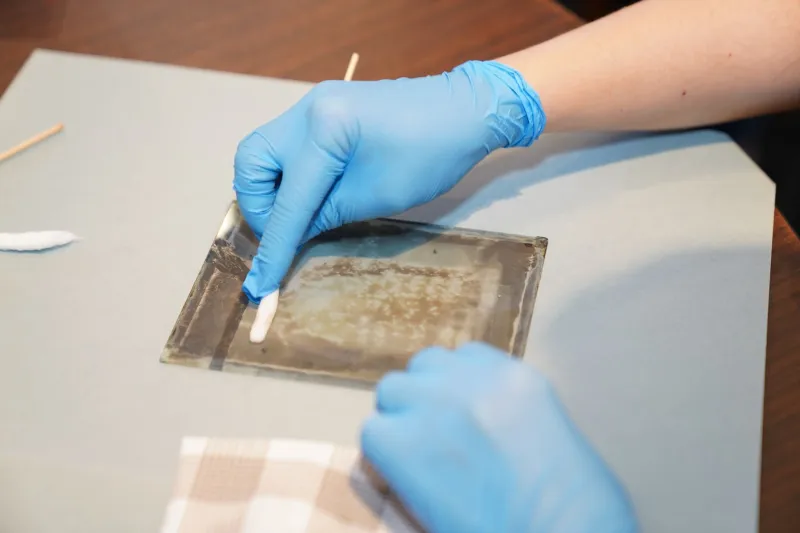
In a climate-controlled workshop tucked behind the main galleries of a regional museum in Oaxaca, México, conservator Valentina Ruiz-Montoya carefully lifts a magnifying loupe to examine a seventeenth-century colonial oil painting. The canvas before her is a catastrophe of cracked varnish, lifted paint layers, and moisture damage that has distorted the faces of its subjects nearly beyond recognition. She has been working on this single piece for eleven months. She expects to continue for at least six more.
"People assume restoration is about speed," she says, setting the loupe down. "It is the opposite of speed. It is about learning to think in centuries."
Ruiz-Montoya is one of a growing but still critically underrecognized generation of Latin American conservation professionals who are confronting an enormous and urgent problem: the accelerating deterioration of an artistic heritage that spans pre-Columbian ceramics, Baroque ecclesiastical painting, mid-century muralism, and contemporary installation work. The threats are multiple and compounding — rising temperatures and humidity fluctuations driven by climate change, chronic underfunding of cultural institutions, and the lingering damage wrought by decades of political upheaval that displaced works, disrupted maintenance, and scattered the expertise needed to care for them.
A Discipline Built on Inherited Knowledge
What distinguishes many Latin American conservators from their counterparts in North America or Western Europe is the degree to which their technical practice remains rooted in knowledge transmitted across generations outside of formal academic channels. In communities across Peru, Guatemala, and Brazil, restoration skills were historically held by artisan families who maintained local churches, civic buildings, and private collections through apprenticeship systems that predated the existence of university conservation programs by several centuries.
Marcelo Quispe Villanueva, a conservator based in Cusco, Peru, learned the fundamentals of gilded-surface repair from his grandfather, who had himself been taught by a craftsman trained in techniques traceable to the colonial-era guild system. When Quispe Villanueva later pursued formal training at a conservation institute in Lima, he found that certain empirical methods his family had refined over generations held up to scientific scrutiny in ways that surprised his instructors.
"There was a particular consolidant preparation my grandfather used for flaking gold leaf on baroque altarpieces," he explains. "When we analyzed it in the laboratory, we found it had properties that modern synthetic alternatives were still trying to replicate."
This intersection of inherited craft wisdom and contemporary science has become one of the defining characteristics of Latin American conservation at its most innovative. Rather than treating traditional knowledge as a quaint footnote to be superseded by laboratory methods, leading practitioners in the field are actively engaged in documenting, testing, and integrating ancestral techniques into their formal methodology.
Technology in the Service of the Irreplaceable
The tools available to today's conservators would have been unimaginable to the craftsmen who first created the works now under their care. Multispectral imaging allows specialists to see beneath layers of overpainting and accumulated grime, revealing original compositions, artist revisions, and hidden damage invisible to the naked eye. X-ray fluorescence mapping can identify the precise chemical composition of pigments, enabling conservators to source historically accurate materials for inpainting. Three-dimensional scanning preserves a digital record of sculptural surfaces with sub-millimeter precision.
In Buenos Aires, Argentina, the conservation laboratory of the Museo Nacional de Bellas Artes has invested significantly in portable analytical equipment that can be transported directly to works that are too fragile or structurally compromised to be moved. Senior conservator Daniela Ferreira led a recent project to stabilize a monumental early-twentieth-century mural in a public building in the city's historic center — a work that had suffered extensive water infiltration damage following years of deferred building maintenance. Using portable X-ray fluorescence alongside traditional plaster consolidation techniques, her team was able to map the full extent of the deterioration before removing a single flake of paint.
"The technology tells you what you are dealing with," Ferreira notes. "But it cannot tell you what to do. That judgment still has to come from the conservator standing in front of the work."
The Political Dimension of Preservation
Conservation in Latin America has never been a purely technical enterprise. The question of which works receive resources, attention, and institutional protection is inseparable from broader questions of cultural politics — questions about whose heritage is deemed worthy of preservation and whose is left to deteriorate.
For much of the twentieth century, the conservation infrastructure that did exist in Latin America was oriented primarily toward works associated with European colonial traditions and the dominant national narratives built around them. Indigenous and Afro-descendant artistic heritage was frequently neglected, misclassified as ethnographic artifact rather than fine art, or simply left outside the scope of formal conservation programs.
That imbalance is slowly being addressed, though the work is far from complete. In Brazil, a network of conservators affiliated with community-based cultural organizations has been conducting condition surveys of Afro-Brazilian religious objects and ceremonial textiles that have never previously received professional conservation assessment. In Bolivia, conservators working in collaboration with indigenous communities are developing protocols for the care of sacred objects that respect the communities' own protocols for access and handling — a significant departure from the extractive models that characterized earlier institutional approaches.
"Preservation is not neutral," says Ruiz-Montoya. "Every choice about what to save is also a choice about what story we are telling about ourselves."
Training the Next Generation
Perhaps the most pressing challenge facing the field is scale. The number of trained conservation professionals across Latin America remains vastly insufficient relative to the volume of works requiring attention. Many regional museums and historic sites operate without any dedicated conservation staff whatsoever. Works deteriorate not because of a lack of will to save them, but because there is simply no one available with the training to do so.
Several institutions are attempting to address this gap through expanded training programs. The Getty Conservation Institute has partnered with regional institutions across Latin America to develop professional development curricula accessible to practitioners who may not have access to major metropolitan training centers. Within Latin America itself, universities in Mexico City, São Paulo, and Santiago have strengthened their conservation programs in recent years, producing graduates who are increasingly choosing to work within the region rather than emigrating to positions in the United States or Europe.
For US-based audiences, the relevance of this work extends well beyond geographical distance. Latin American masterworks are held in significant numbers by American museums, universities, and private collections — many of them works whose conservation histories are poorly documented and whose current condition has not been assessed in decades. The expertise being developed and refined by conservators like Ruiz-Montoya, Quispe Villanueva, and Ferreira is directly applicable to the care of those collections.
A Quiet Heroism
Conservation is, by its nature, a discipline that resists visibility. A successful restoration is one in which the intervention is imperceptible — in which the work appears simply as it was meant to appear, without any trace of the labor that made that appearance possible. The conservators who achieve this are, by the logic of their own craft, invisible.
But the consequences of their absence would be unmistakable. Without this quiet, painstaking work — conducted in climate-controlled workshops and scaffolded churches and underfunded museum basements across the hemisphere — centuries of artistic achievement would continue their slow dissolution into irreversibility. The masterworks of Latin America are not merely aesthetic objects. They are primary documents of civilizations, carriers of memory, and evidence of the full complexity of human creative life in this part of the world.
The conservators working to save them deserve to be seen.