Raising the Baton: The Latin American Maestros Who Quietly Rewrote the American Orchestral Canon
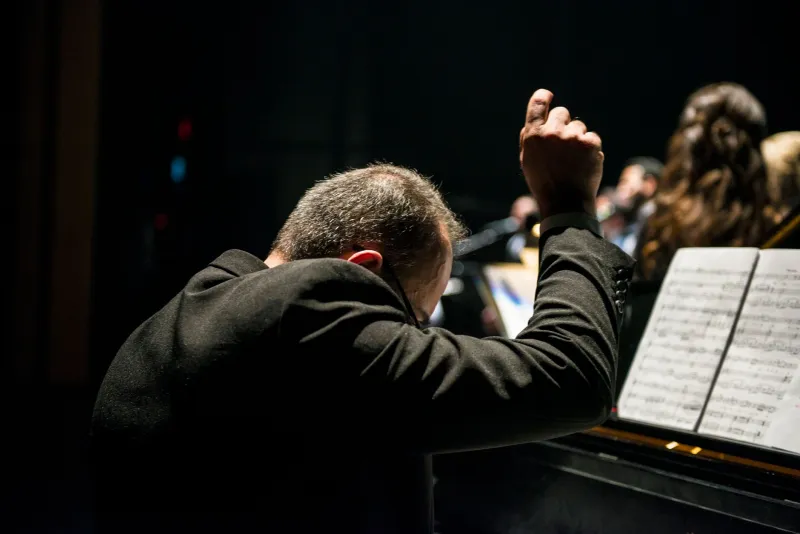
In the grand concert halls of New York, Chicago, and Los Angeles, the story of American classical music has long been told in familiar terms: European emigres fleeing war, homegrown prodigies ascending through elite conservatories, and institutional titans whose names adorn donor plaques and season brochures. Yet threading through that well-rehearsed narrative is another story — quieter, less celebrated, and arguably more transformative — of Latin American conductors who arrived at American podiums carrying entirely different musical inheritances and proceeded, with discipline and vision, to expand what the American orchestra could be.
These were not peripheral figures. They led major symphony orchestras, trained generations of American musicians, and introduced repertoire that had been systematically overlooked by institutions anchored to a narrow European canon. Their influence shaped the sonic identity of American classical music in ways that scholars are only now beginning to fully document.
A Different Kind of Musical Formation
To understand what Latin American maestros brought to American orchestral life, it is essential to first appreciate the distinctive nature of their musical formation. Many were trained in conservatories in Buenos Aires, Mexico City, Caracas, and São Paulo — institutions that, by the mid-twentieth century, had developed rigorous pedagogical traditions that synthesized European classical training with local harmonic vocabularies, rhythmic sensibilities, and compositional philosophies.
Conductors emerging from this environment possessed something that many of their American and European counterparts did not: an intimate familiarity with a vast body of orchestral and chamber music composed in the Western Hemisphere that was rarely, if ever, programmed by mainstream American orchestras. Works by Alberto Ginastera, Heitor Villa-Lobos, Carlos Chávez, and Silvestre Revueltas were not exotic curiosities to these maestros — they were foundational texts, as central to their musical identity as Brahms or Beethoven.
When these conductors arrived at American podiums, they did not abandon the European canon. Rather, they expanded it, insisting — sometimes against considerable institutional resistance — that the orchestral tradition was broader and richer than American concert culture had been willing to acknowledge.
The Repertoire Revolution
The most immediate and measurable contribution of Latin American conductors to American orchestral life was their transformation of programming. Before their sustained presence on major podiums, Latin American orchestral music was almost entirely absent from American concert seasons. The assumption, rarely articulated but deeply embedded in curatorial practice, was that serious orchestral composition had occurred almost exclusively in Western Europe.
Maestros from Latin America challenged that assumption directly. By programming Ginastera's Estancia ballets alongside Stravinsky, or pairing Villa-Lobos's Bachianas Brasileiras with Bach, they demonstrated not only the technical sophistication of Latin American orchestral writing but also its capacity to enter into meaningful dialogue with the European works that anchored every season. Audiences responded. Critics, more cautiously, began to take notice.
This was not merely a curatorial preference — it was a principled act of cultural assertion. These conductors understood that what gets performed in a concert hall defines, over time, what is understood to matter. To absent Latin American music from those programs was to render it invisible in the cultural imagination of the country. To include it, season after season, was to insist on its legitimacy.
Reshaping the Orchestra from Within
Beyond programming, Latin American maestros also exerted a transformative influence on the institutional cultures of the orchestras they led. American symphony orchestras in the mid-twentieth century were, in many respects, hierarchical and tradition-bound organizations, resistant to innovation in both repertoire and rehearsal practice. Several Latin American conductors brought to their positions a different model of musical leadership — one that prioritized collaborative engagement with musicians, attentiveness to the expressive possibilities of rhythmic nuance, and a willingness to interrogate long-settled interpretive conventions.
Musicians who worked under these conductors frequently described rehearsals that felt unlike any they had experienced under European or American-born directors. There was, by multiple accounts, a particular attention to the physicality of rhythm — to the way a phrase could breathe differently, could carry a different weight, depending on where its pulse was felt and how it was communicated through the body. This was not a rejection of European interpretive tradition; it was an enrichment of it.
The orchestras shaped by this approach often developed a flexibility and rhythmic vitality that distinguished their performances. In some cases, that distinctive quality became part of the ensemble's identity — a sonic fingerprint that audiences and critics recognized without always being able to name its source.
The Silence Around Their Names
And yet, for all of this, the names of Latin American conductors occupy at best a marginal position in the standard histories of American classical music. The reasons for this erasure are multiple and interconnected. Some are structural: the institutions that produce musical history — major music journalism outlets, academic musicology departments, the curatorial apparatus of leading orchestras — have historically been oriented toward European and Anglo-American narratives. Figures who do not fit comfortably within those narratives tend to be footnoted rather than centered.
Other reasons are more specific to the experience of Latin American artists in the United States. Conductors who programmed Latin American repertoire were sometimes characterized, even by sympathetic critics, as advocates for a regional tradition rather than as universal artists. This framing, however well-intentioned, subtly diminished the scope of their contribution, positioning them as specialists rather than as the broadly visionary musicians they were.
There is also the matter of institutional memory. When a conductor departs an orchestra, the preservation of their legacy depends on the willingness of that institution to maintain and disseminate records of their tenure — programs, recordings, correspondence, critical reception. For Latin American conductors, that institutional investment has often been inconsistent, leaving gaps in the archival record that make historical recovery more difficult.
Why Recovery Matters
At the Rigo Camerano Cultural Foundation, we hold that the recovery of marginalized artistic legacies is not an exercise in nostalgia. It is an act with direct bearing on the present. The American orchestral world today is engaged in serious, often contentious conversations about repertoire, representation, and institutional culture. Those conversations would be better informed — and more productively grounded — by a fuller understanding of what Latin American conductors achieved in the decades when they were quietly transforming the institutions they served.
The lesson these maestros offer is not a simple one. It is not the story of outsiders storming the gates of a resistant establishment. It is something more nuanced and, ultimately, more instructive: the story of artists who worked within existing institutions while persistently expanding their horizons, who honored tradition while refusing to accept its most limiting definitions, and who did so with a patience and rigor that commands respect.
Their batons have been set down. The music they made possible continues to sound. It is time to learn their names.
The Rigo Camerano Cultural Foundation is committed to the documentation and celebration of Latin American artistic contributions across all disciplines. We invite researchers, musicians, and cultural institutions to join us in the ongoing work of historical recovery.