Ancient Voices, Modern Frequencies: Indigenous Latin American Instruments Enter the Global Studio
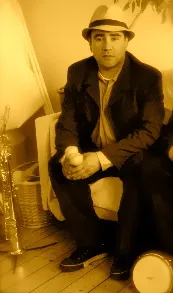
Photo: Luchano, CC BY 3.0, via Wikimedia Commons
There is a moment in certain recordings — a breath before a melody, a resonance that seems to arrive from somewhere much older than the studio in which it was captured — that stops a listener entirely. Increasingly, that moment is being generated by instruments that have existed for centuries in the highlands of Peru, the forests of Brazil, or the plains of Bolivia, now routed through digital audio workstations and distributed across streaming platforms to audiences who may never have set foot in the communities that gave those sounds their meaning.
The presence of indigenous Latin American instruments in mainstream music production is no longer a novelty. It is a movement — one that carries with it both extraordinary creative promise and a set of ethical responsibilities that the industry is only beginning to reckon with seriously.
The Instruments Themselves: A Living Archive
To understand what is at stake, one must first appreciate what these instruments represent beyond their sonic qualities. The siku, or Andean panpipe, is not merely a woodwind instrument. It is a vessel of cosmological knowledge, its paired halves — arca and ira — designed to be played by two musicians simultaneously, embodying a philosophy of complementary duality rooted in Aymara and Quechua thought. The berimbau, the single-stringed percussion bow central to the Afro-Brazilian martial art of capoeira, carries within its resonance centuries of resistance, survival, and coded communication among enslaved communities.
The charango, the quena, the cajón, the huapanguera — each instrument is, in the words of ethnomusicologist Dr. Carmen Villanueva of the University of Texas at Austin, "a compressed archive. When you hear it, you are hearing not just a sound but a relationship between a people and their land, their history, and their understanding of the cosmos."
This is precisely what makes these instruments so compelling to contemporary producers. And it is precisely what makes their appropriation so consequential.
The New Collaborators
Not all engagement with indigenous musical traditions follows the extractive model that has historically defined the relationship between Western commercial music and the Global South. A growing cohort of producers — many of them Latin American themselves, working from cities like Los Angeles, Miami, New York, and Chicago — are approaching these instruments through frameworks of genuine partnership.
Producer Marco Delgado, a Peruvian-American based in Los Angeles whose work spans reggaeton, ambient electronic, and experimental hip-hop, has spent the past several years developing ongoing relationships with musicians from the Cusco region of Peru. His process is deliberate and, by industry standards, unusually slow.
"I do not sample recordings without consent," Delgado has explained in interviews. "I travel. I sit with musicians. I ask them what they want people to understand about these sounds. And then I ask if they want to be part of what I am building — not as a resource I am drawing from, but as collaborators who have creative authority over how their tradition appears in the final work."
This model — what scholars of cultural heritage are beginning to call reciprocal sonic collaboration — stands in deliberate contrast to the practice of lifting field recordings or commercially available samples without attribution, compensation, or community consultation. It demands more time, more investment, and a fundamental rethinking of who holds authorship over traditional musical forms.
Streaming Platforms and the Question of Credit
The structural conditions of the contemporary music industry present particular challenges for this kind of ethical engagement. Streaming platforms are not designed to accommodate collective or community-based authorship. Royalty structures favor individual rights holders. The metadata systems that govern how music is catalogued and credited were built around Western intellectual property frameworks that have little capacity to recognize communal ownership of traditional knowledge.
Advocates within the Latin American cultural preservation community have been pressing for systemic reform on these fronts. The Rigo Camerano Cultural Foundation has long maintained that the preservation of Latin American artistic heritage requires not only celebrating its creative vitality but also ensuring that the communities at its source retain meaningful control over how it circulates in the wider world.
This means pushing for transparency in sampling credits, supporting legislative frameworks that recognize traditional cultural expressions as forms of intellectual property, and educating audiences — particularly in the United States, where consumption of globally sourced music is enormous — about the difference between encountering a tradition and exploiting one.
When Fusion Becomes Erasure
The creative results of thoughtful collaboration can be genuinely transformative. Albums that weave siku melodies into electronic compositions, or that build rhythmic structures around the berimbau's hypnotic oscillations, have introduced millions of listeners to sonic worlds they would never otherwise have encountered. In the best cases, this exposure generates curiosity, respect, and a desire to learn more about the cultures from which these sounds emerge.
But fusion without context carries its own risks. When an instrument is stripped of its cultural narrative and repackaged as an "exotic" texture — a means of lending atmospheric depth to a commercial product — it can actively contribute to the flattening of the very traditions it superficially celebrates. Listeners hear the sound without the story. The instrument becomes a signifier of vague "otherness" rather than a carrier of specific, irreplaceable knowledge.
Músico and cultural educator Sofía Quispe, who teaches traditional Andean music at a community arts center in Denver, Colorado, has observed this dynamic directly. "My students hear these instruments in popular songs and they are curious," she notes. "But sometimes the version they have heard is so decontextualized that I spend half my time dismantling misconceptions before I can teach them anything true. The music has traveled, but the meaning has not."
Building Toward a More Accountable Industry
The path forward requires both individual commitment and structural change. Producers must be willing to invest in genuine relationships rather than convenient samples. Labels must develop credit and compensation frameworks that honor communal authorship. Audiences must cultivate the habit of asking not just what they are listening to, but where it comes from and who benefits when they stream it.
Above all, the communities whose musical heritage is entering the global mainstream must be recognized as active participants in these conversations — not as passive sources of raw material, but as rights-bearing custodians of living traditions that belong, first and foremost, to them.
The invisible orchestra is becoming audible. The question now is whether the world will listen with the depth of attention these ancient voices deserve.