Outside the Academy: How Latin American Masters Are Building Their Own Schools Across America
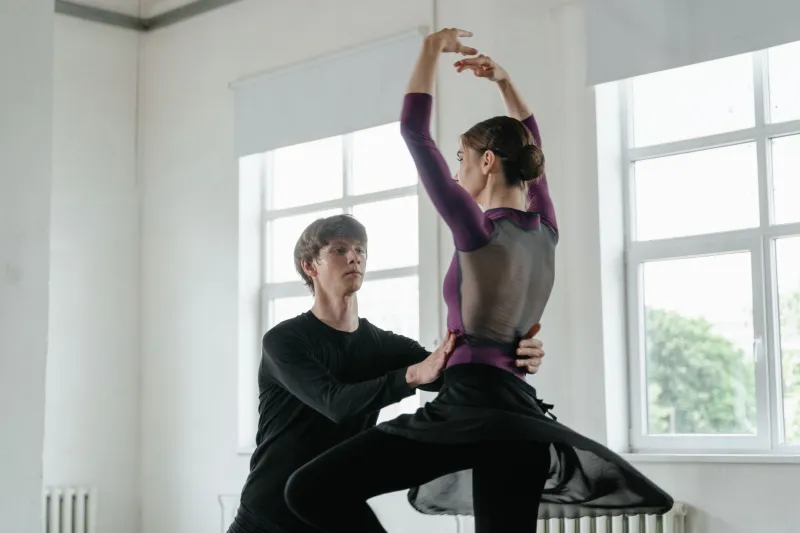
The building in Miami's Little Havana neighborhood does not advertise itself. There is no marquee above the door, no institutional seal pressed into the exterior wall. Yet on any given weekday afternoon, a dozen young dancers move through the interior space with the focused discipline of conservatory students, guided by a woman who spent three decades performing with some of the most celebrated folkloric companies in Cuba before settling in South Florida. She does not hold an adjunct appointment. She does not submit to accreditation reviews. She teaches because she understands, with a clarity born of experience, that what she carries will not survive unless it is deliberately passed forward.
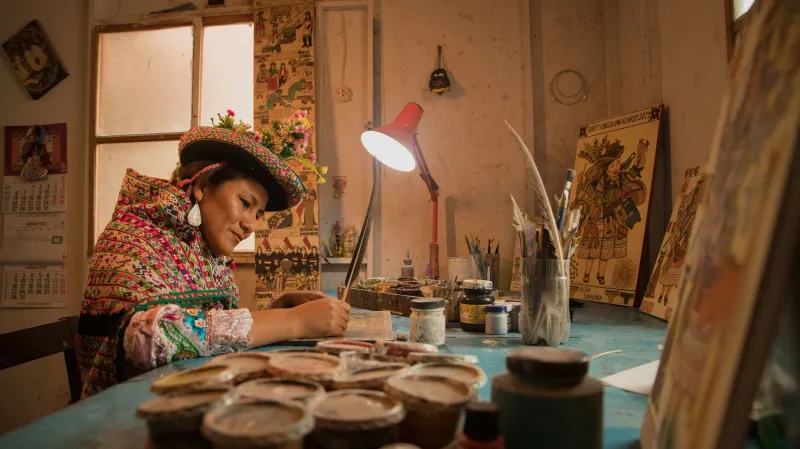
This scene is not exceptional. Across the United States—from the sculpture workshops of East Los Angeles to the printmaking collectives of Chicago's Pilsen neighborhood, from the cuatro instruction studios of Houston to the textile arts centers quietly operating in Queens—Latin American masters are building private academies of their own design. These institutions exist outside the credentialing economy of American higher education, and that distance is, for many of their founders, precisely the point.
A Parallel Infrastructure of Knowledge
The emergence of these spaces reflects a structural reality that Latin American artists in the United States have long navigated. Formal arts institutions—universities, conservatories, municipally funded cultural centers—have historically struggled to accommodate the full breadth of Latin American artistic tradition. Curricula built around European canon and American contemporary practice leave little room for the technical demands of son jarocho, the visual grammar of Andean textile design, or the theatrical conventions of Argentine physical theater. When Latin American masters do find positions within these institutions, they frequently describe the experience of compression: of being asked to translate rich and complex traditions into survey-level content, stripped of depth and duration.
Private academies offer an alternative architecture. Founded and governed by practitioners themselves, these spaces can structure learning around the actual demands of a given tradition rather than the scheduling constraints of a semester system or the marketing requirements of a university admissions office. A sculptor trained in the pre-Columbian-influenced modernism of mid-century Mexico City can teach her students to understand material and form through the same extended, repetitive engagement she experienced as an apprentice—something a fourteen-week course simply cannot replicate.
The Economics of Transmission
It would be a mistake to romanticize these institutions without acknowledging the economic pressures that shape them. Operating without institutional subsidy, many of these academies function on tuition income alone, supplemented in some cases by performance fees, commissioned work, or small grants from local arts councils. The founders bear financial risk that their counterparts at funded institutions do not. Studio rent in cities like Los Angeles and New York has made sustainability a constant negotiation.
And yet a distinct economic logic has emerged. Several of these academies have developed what might be described as vertically integrated models: training young artists who then perform or exhibit under the founding master's direction, generating revenue that flows back into the school. Others have established tiered structures in which advanced students subsidize the training of beginners, creating a self-sustaining cycle of investment and return. In Chicago, one ceramicist of Colombian origin has built a studio that functions simultaneously as a teaching space, a production workshop, and a retail gallery—each activity supporting the others.
The result is a micro-economy of cultural knowledge, one that assigns real market value to forms of artistic expertise that mainstream institutions have consistently undervalued. That these economies are being constructed by Latin American artists, for Latin American artistic traditions, carries significance beyond the pragmatic.
Resisting Homogenization
The question of cultural authenticity sits at the center of this movement, though the founders of these academies tend to approach it with nuance rather than dogma. The concern is not purity in any rigid sense—most of these teachers embrace hybridity and evolution as inherent to living tradition. The concern, rather, is the particular kind of flattening that occurs when a tradition is processed through institutions designed for other purposes.
American arts education, at its broadest scale, tends toward consolidation. Market pressures and enrollment logic encourage programs to emphasize broadly applicable skills over the deep specificity of particular traditions. A student who enters a university dance program hoping to develop mastery in Colombian cumbia may emerge four years later with a generalist's vocabulary and a specialist's ambition, but without the technical foundation that mastery actually requires. The private academies founded by Latin American masters are, among other things, a response to this structural tendency—an insistence that depth is not an obstacle to relevance, but the condition of it.
What the Students Carry Forward
The students who pass through these spaces describe their experiences in terms that distinguish them sharply from conventional arts education. Several who spoke with the Rigo Camerano Cultural Foundation for this article emphasized the relational dimension of their training: the sense of being inducted into a lineage rather than simply acquiring a skill set. One young muralist, trained in a Los Angeles studio founded by a veteran of Mexico's post-revolutionary public art movement, described the experience of learning to mix pigments according to methods her teacher had learned from a direct student of Diego Rivera's workshop. The technique itself matters, she said. But what matters equally is understanding where it came from and why it was preserved.
This orientation toward lineage—toward the idea that artistic knowledge is not merely technical but historical and relational—is perhaps the defining characteristic of these institutions. It is also what makes them genuinely difficult to replicate within mainstream educational frameworks, which tend to evaluate learning through outcomes rather than continuity.
The Stakes of Informal Greatness
The informal nature of these academies creates real vulnerabilities. Without institutional permanence, their survival depends heavily on the health and continued presence of their founders. Documentation practices vary widely. Succession planning is rarely formalized. The knowledge housed in these spaces is, in the most literal sense, embodied—and embodied knowledge is among the most fragile of cultural assets.
These vulnerabilities make the work of organizations like the Rigo Camerano Cultural Foundation all the more essential. Identifying, documenting, and connecting these academies—building a visible network where an invisible one currently operates—is not simply an archival project. It is an act of cultural investment, a recognition that the future of Latin American artistic tradition in the United States may depend less on what happens inside major institutions than on what is being built, carefully and deliberately, in the spaces between them.
The woman in Little Havana does not have a website. Her students find her the way students have always found the best teachers: through word of mouth, through community, through the quiet reputation that genuine mastery generates over time. That is, in its own way, a form of resistance—and a form of preservation more durable than any credential.