Reclaimed From the Vault: How Independent Conservators Are Returning Colonial-Era Latin American Art to the Light
There is a particular kind of silence that settles over a storage vault. Climate-controlled, dim, and sealed against the outside world, these rooms hold objects that were never meant to disappear — devotional paintings commissioned by colonial-era parishes, pre-Columbian ceramics excavated from sacred sites, gilded retablos crafted by Indigenous artisans whose names history never recorded. For much of the twentieth century, major American and European museums acquired these objects in large numbers. What they did not always do was show them.
Today, an informal but growing network of Latin American artists, cultural scholars, and heritage organizations is pushing back against that arrangement. Working without the institutional authority of established museums and often without significant funding, these independent conservators and cultural advocates are constructing their own infrastructure — restoration studios, traveling exhibitions, community lending programs, and digital archives — to ensure that colonial-era and pre-Columbian Latin American art reaches the audiences it was always meant to serve.
A Heritage Held at Arm's Length
The scope of the problem is difficult to overstate. Surveys conducted by independent heritage researchers over the past decade suggest that a significant proportion of Latin American colonial-era objects held by major American institutions remain in permanent or semi-permanent storage. The reasons given by institutions vary: insufficient gallery space, lack of curatorial expertise, concerns about provenance documentation, or simple programmatic priority. For communities whose cultural identity is bound up in these objects, however, the effect is the same regardless of the explanation — their heritage is present within an institution but functionally inaccessible.
This situation has a history. The large-scale acquisition of Latin American art by North American and European museums accelerated through the nineteenth and early twentieth centuries, often under conditions that contemporary scholars describe as ethically compromised at best. Objects moved from churches, private collections, and archaeological sites into institutional holdings, frequently without the consent or involvement of the communities most directly connected to them. Once inside a major museum, an object's fate depended almost entirely on the institution's curatorial priorities — priorities that, for much of that period, did not place Latin American colonial art near the center.
Building the Infrastructure of Recovery
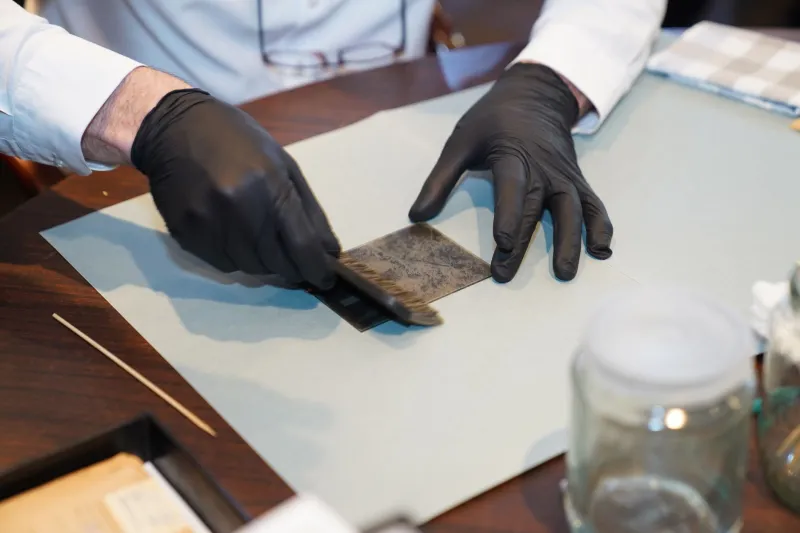
What distinguishes the current generation of independent conservators is not simply their frustration with institutional inertia, but their determination to build workable alternatives. Across cities including Los Angeles, Miami, Chicago, and San Antonio — each home to substantial Latin American diaspora communities — small organizations have established restoration studios equipped with the same fundamental tools as their institutional counterparts: controlled humidity chambers, ultraviolet examination equipment, archival documentation systems, and networks of trained conservators.
The technical challenges are formidable. Colonial-era Latin American painting, for instance, often combines European oil techniques with Indigenous pigments and support materials, creating conservation problems that standard Western restoration training does not always address adequately. A crumbling retablo from seventeenth-century New Spain may require knowledge of local wood species, traditional gesso formulations, and the specific mineral-based pigments favored by colonial workshops — knowledge that exists within specialized scholarly communities but is rarely integrated into mainstream conservation curricula.
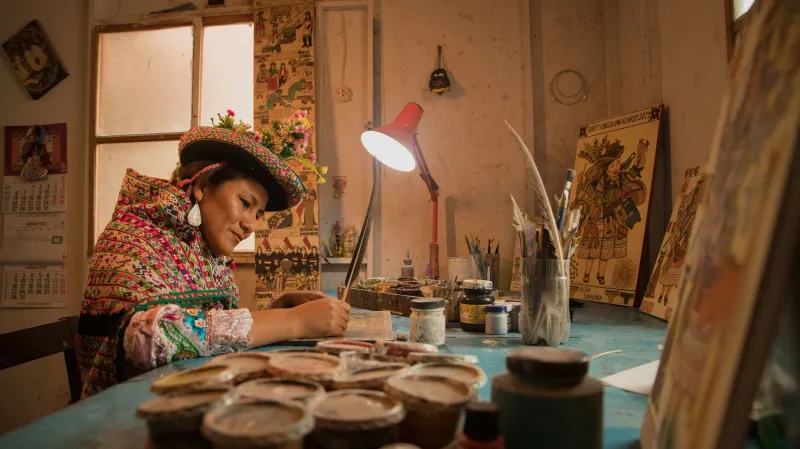
Independent conservators working in this space have responded by developing hybrid training models, pairing formal conservation education with direct apprenticeship under craftspeople who maintain living knowledge of traditional materials and methods. The result is a generation of practitioners who bring both technical rigor and cultural fluency to the work — a combination that institutional conservation departments are only beginning to replicate.
The Political Terrain of Restoration
Conservation is never a purely technical enterprise. Every decision about how to treat a damaged object — what to restore, what to leave unrestored, how to document the work, and for whom the restored object will ultimately be displayed — carries cultural and political weight. For Latin American colonial art, that weight is especially significant.
Many of the objects now in institutional storage occupy genuinely complicated historical terrain. A painting produced in a colonial workshop may represent the labor of Indigenous artists working under conditions of profound coercion, expressing Christian iconography in forms that subtly encode Indigenous visual traditions. To restore such an object is to make choices about which layer of its history to foreground. Independent conservators working within Latin American cultural communities tend to approach these choices differently than institutional practitioners — not because they are less rigorous, but because their frame of reference includes the communities from which these objects came.
This distinction has not gone unnoticed by the institutions themselves. Some major museums have begun reaching out to independent organizations for consultation, a development that advocates within the movement regard with cautious optimism. Collaboration is welcome, they note, but collaboration must not become co-optation. The goal is not to improve the institutional model at the margins — it is to establish a genuinely alternative model in which Latin American communities exercise meaningful authority over their own heritage.
Exhibition Without Permission
Perhaps the most visible dimension of this movement is its approach to exhibition. Unable or unwilling to wait for institutional gallery space, independent organizations have developed a range of alternative display formats. Traveling exhibitions installed in community centers, universities, and cultural institutions with smaller footprints have brought restored colonial-era works before audiences in cities from Houston to New York. Digital exhibitions, some developed in partnership with Latin American universities and heritage organizations, have extended that reach globally.
The Rigo Camerano Cultural Foundation has observed this development with considerable interest. The instinct driving it — that art serves its fullest purpose when it remains in living relationship with the communities it emerged from — resonates deeply with the broader mission of Latin American cultural preservation. When a restored colonial painting is displayed in a community space in East Los Angeles or a digital archive of pre-Columbian ceramics is made freely available to students in Oaxaca and Ohio alike, the object recovers something that storage cannot provide: presence, context, and meaning.
Toward a Reckoning
The movement to reclaim colonial-era Latin American art from institutional vaults is, at its core, a reckoning with a long history of unequal cultural authority. It does not require the vilification of every institution that holds Latin American art, nor does it dismiss the genuine preservation work that many museums have performed over decades. What it does require is an honest accounting of who has benefited from the current arrangement and who has not — and a serious commitment to building something more equitable in its place.
The conservators, artists, and advocates doing this work are not waiting for that accounting to arrive from above. They are conducting it themselves, object by object, studio by studio, exhibition by exhibition. In doing so, they are not only preserving Latin American art. They are preserving the right of Latin American communities to define what that preservation means.