Sacred Ground: How Latin American Communities Are Defending Their Spiritual Traditions From Commodification
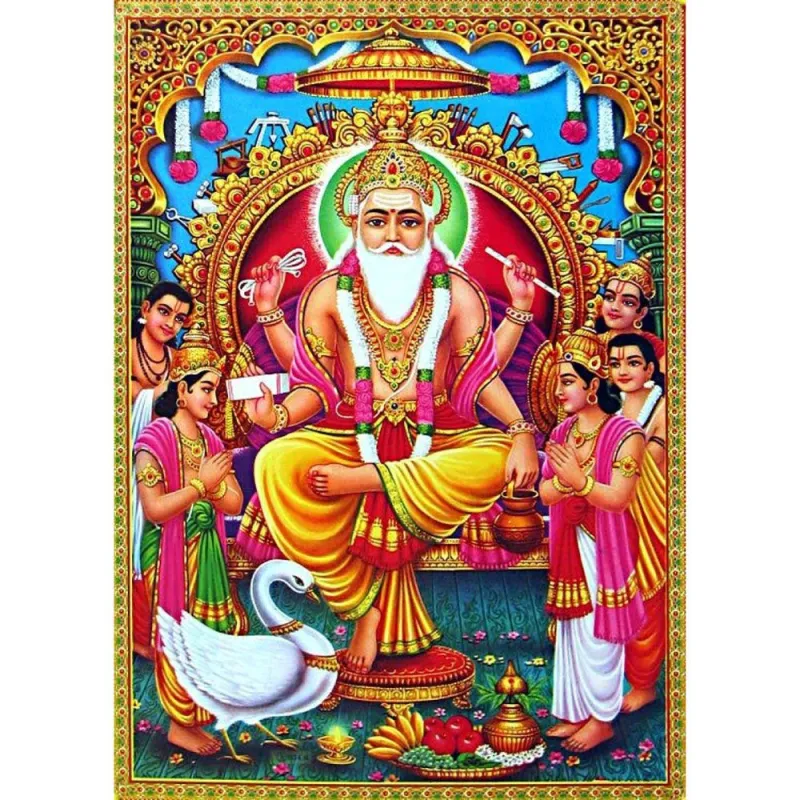
Photo: indigenous Latin American community ceremony ritual traditional spiritual gathering, via i.pinimg.com
There is a particular kind of violence that does not announce itself. It arrives dressed in the language of appreciation, carrying a camera and a credit card, and it leaves having taken something that was never offered — something that, once extracted from its living context, cannot easily be returned. Across Latin America, indigenous and traditional communities know this kind of harm intimately. Their ceremonies, their altars, their healing rituals, and their cosmological practices have been photographed, packaged, and sold in forms that bear little resemblance to the original.
Yet the communities themselves have not been passive. What is emerging across the hemisphere is a sophisticated, diverse, and often deeply moving effort to protect sacred traditions on the communities' own terms — not by building walls of total exclusion, but by insisting on authorship, context, and consent.
The Difference Between Sharing and Surrendering
The tension at the heart of this conversation is not simply between openness and secrecy. Most traditional communities have never sought absolute isolation; the transmission of spiritual knowledge has always involved some form of exchange, and many practitioners genuinely welcome respectful engagement from outside their immediate cultural circle. The problem arises when that engagement is extractive rather than reciprocal — when outsiders consume the surface of a ceremony without honoring its depth, or when commercial interests reduce a living spiritual practice to a marketable aesthetic.
The Day of the Dead observances in Mexico offer a widely discussed example. What began as a deeply specific set of Nahua and other Mesoamerican practices for communing with the deceased has, over several decades, been transformed in the American popular imagination into something considerably more diffuse — a visual vocabulary of marigolds and sugar skulls available for purchase in seasonal sections of big-box retailers. Many Mexican and Mexican-American communities in the United States have watched this transformation with a mixture of resignation and resistance, working to reclaim the practice's spiritual and familial meaning even as its commercial facsimile proliferates.
This dynamic is not unique to Mexico. Andean despacho ceremonies, Amazonian plant medicine traditions, Afro-Brazilian Candomblé rituals, and Guatemalan Maya spiritual practices have all faced various degrees of commodification, misrepresentation, and unauthorized reproduction. The communities stewarding these traditions are responding in ways that are as varied as the traditions themselves.
Grassroots Strategies for Protecting What Is Sacred
In Oaxaca, indigenous Zapotec communities have established community protocols — formal agreements that govern how their cultural practices may be documented, discussed, or shared with visitors. These protocols, developed through collective deliberation rather than imposed from outside, give communities meaningful agency over their own representation. They are not blanket prohibitions; rather, they create frameworks within which genuine cultural exchange can occur while preventing the most harmful forms of extraction.
In the Amazon basin, indigenous federations in countries including Ecuador, Peru, and Brazil have worked with legal advocates to assert intellectual property rights over traditional knowledge, including knowledge embedded in ceremonial practices. While international intellectual property law was not designed with indigenous epistemologies in mind, creative applications of existing frameworks — combined with advocacy for new legal instruments — have yielded some meaningful protections.
In the United States, where large and vibrant Latin American diaspora communities maintain connections to ancestral spiritual practices, community organizations have taken on an educational role. Explaining to well-meaning but uninformed outsiders why a healing ceremony is not a workshop, why a sacred object is not a souvenir, and why participation requires relationship rather than a ticket — this work is unglamorous and ongoing, but it is essential.
Digital Platforms as a Double-Edged Inheritance
The relationship between traditional spiritual communities and digital technology is neither uniformly positive nor uniformly threatening. Social media and online platforms have, in some cases, dramatically accelerated the commodification problem: a ceremony photographed without permission and posted to Instagram can reach millions of viewers before the community has any opportunity to respond. Wellness influencers, spiritual tourism operators, and content creators have all contributed to the rapid decontextualization of sacred practices in the digital environment.
Yet the same tools have also enabled communities to tell their own stories, in their own voices, to audiences they could not previously have reached. Indigenous-led YouTube channels, community-controlled websites, and digital archives maintained by cultural organizations are allowing traditional knowledge holders to establish authoritative records of their practices — records that can serve both as internal educational resources and as public-facing correctives to misrepresentation.
The Rigo Camerano Cultural Foundation recognizes this duality. Technology is not inherently preservationist or destructive; its impact depends entirely on who controls it and toward what ends it is directed. When communities hold the keys to their own digital representation, the results can be genuinely empowering.
The Question of Accessibility and the Ethics of Witness
Perhaps the most philosophically complex aspect of this conversation concerns the question of who may witness, and under what circumstances. Some spiritual traditions include elements that are, by their nature and by the explicit intention of those who practice them, not meant for public observation. Others have historically welcomed guests, provided those guests understand their role and conduct themselves accordingly.
There is no universal answer to the question of how accessible sacred practices should be to outside observers. What is clear is that the answer belongs to the communities themselves. External parties — whether journalists, academics, tourists, or well-intentioned cultural organizations — do not have standing to determine what level of openness is appropriate for traditions they did not create and do not sustain.
For US audiences accustomed to the assumption that cultural experiences are available for consumption, this principle can require a meaningful recalibration. Genuine respect for Latin American spiritual traditions means accepting that some things are not ours to see, and finding value in that boundary rather than treating it as an obstacle.
Continuity as the Deepest Form of Preservation
Ultimately, the most effective protection for any spiritual tradition is its continued practice by the community that holds it. Ceremonies that are actively performed, teachings that are actively transmitted, and relationships between practitioners and their cosmological frameworks that remain alive and meaningful — these are what ensure that a tradition survives not as an artifact but as a living inheritance.
The grassroots movements described here are, at their core, efforts to maintain those conditions of continuity. They are not primarily about keeping outsiders away; they are about keeping the tradition itself healthy, coherent, and capable of speaking to new generations on its own terms.
The Rigo Camerano Cultural Foundation is committed to supporting this work — not by speaking for communities, but by amplifying their voices, honoring their frameworks, and contributing to a cultural environment in the United States where Latin American spiritual traditions are approached with the seriousness, humility, and respect they have always deserved.