Before the Museum Arrives: Latin American Artists Who Are Writing Their Own Art History
The Waiting Room No One Agreed to Enter
There is an unspoken contract embedded in the traditional relationship between artists and cultural institutions. The artist creates. The institution decides what matters. Decades pass. A retrospective is mounted, a catalogue is published, and history is written—largely by people who were not in the room when the work was made.
For generations of Latin American artists working in the United States and across the hemisphere, that contract has produced a particular kind of erasure. Works disappear into private collections without documentation. Movements are attributed to artists who arrived later but spoke louder. Entire bodies of work are deemed too regional, too political, or too unfamiliar for the institutional appetite of any given decade—and by the time tastes shift, the primary sources have scattered.
A growing number of artists are declining this arrangement entirely.
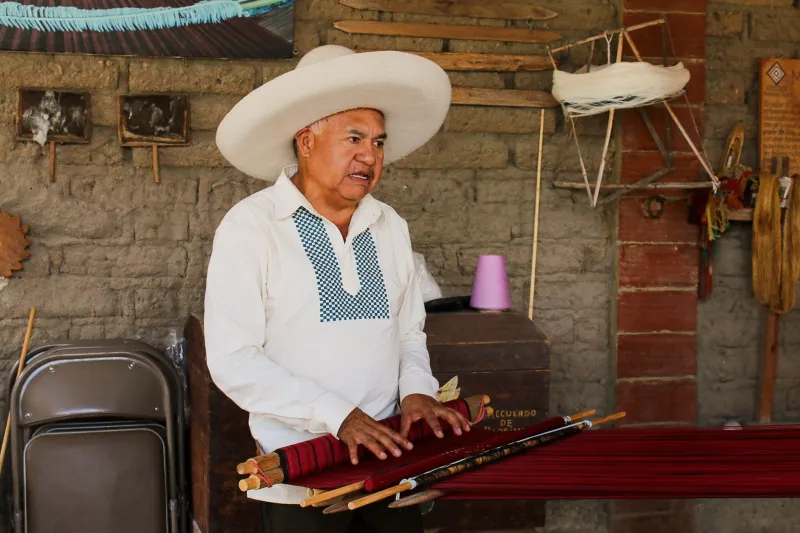
They are not waiting for museum acquisition committees or curatorial fellowships to determine what is significant. They are building their own archives, establishing their own exhibition spaces, and asserting control over the interpretation of their work with an urgency that reflects hard-won understanding: institutions move on institutional timelines, and those timelines have rarely served Latin American artists well.
The Archive as Act of Resistance
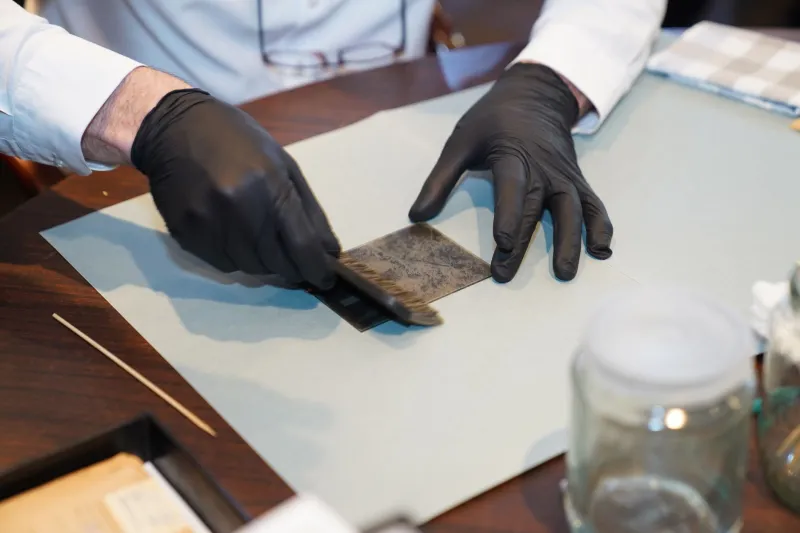
When the Mexican-American painter and printmaker Dolores Vásquez-Ruiz—a composite figure representative of a broader pattern the Foundation has documented across multiple artists—began digitizing decades of studio correspondence, rejected grant applications, and exhibition reviews in both English and Spanish, she described the project not as nostalgia but as self-defense.
"The museum will eventually want the paintings," she remarked during a community forum in Los Angeles. "But without the letters, without the rejections, without the context of why certain work was made when it was made, they will tell a story that is easier for them to tell. I am making sure that story is harder to simplify."
This instinct—to preserve not just the finished object but the full intellectual and emotional terrain surrounding its creation—distinguishes the new wave of artist-led archival projects from simple self-promotion. These are not vanity collections. They are counter-narratives assembled with scholarly precision, designed to survive the artist and outlast institutional indifference.
In Miami, Chicago, and Houston—cities with substantial Latin American creative communities that have historically been underrepresented in major institutional collections—artists are partnering with community organizations, university libraries, and digital preservation specialists to build archives that will remain accessible regardless of market fluctuations or curatorial fashion.
Artist-Run Spaces and the Geography of Legitimacy
Archiving is only one dimension of this reclamation project. The physical exhibition space remains a powerful arbiter of legitimacy in American art culture, and Latin American artists are increasingly unwilling to cede that ground.
Across the country, artist-run galleries and cooperative exhibition spaces founded by Latin American creatives are functioning not merely as alternatives to established institutions but as deliberate correctives to them. These spaces exhibit work that major museums have overlooked, contextualize it within traditions that mainstream curatorial frameworks frequently misread, and do so on terms set by the artists and communities most directly implicated in the work's meaning.
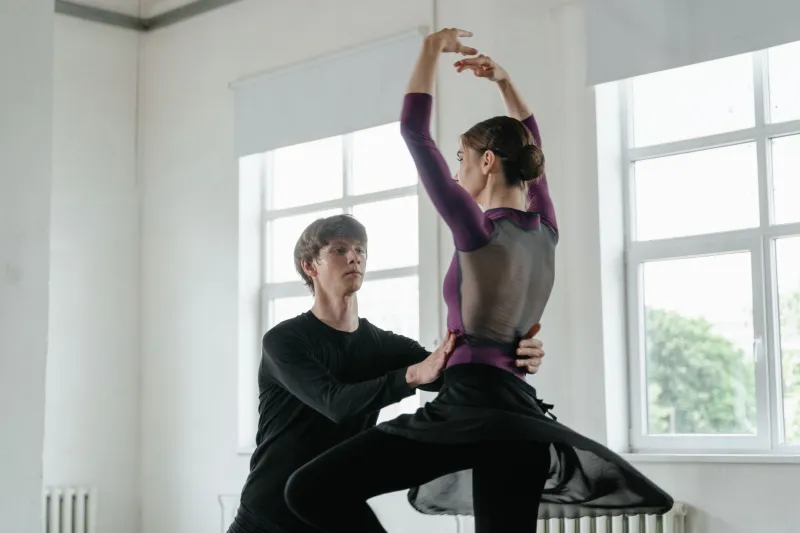
What distinguishes many of these ventures is their explicit commitment to intergenerational continuity. Established artists are not simply creating spaces for their own retrospectives; they are designing platforms where emerging artists from similar cultural backgrounds can exhibit work in dialogue with the legacy of their predecessors. The gallery becomes a living archive—a place where the past and the present speak to each other without institutional mediation.
The Rigo Camerano Cultural Foundation has observed this model operating with particular effectiveness in cities where Latin American populations are large enough to sustain an independent cultural economy. When the audience is already present, the need to appeal to a mainstream institutional gatekeeper diminishes, and the work can be shown and discussed on its own terms.
Controlling the Interpretive Frame
Perhaps the most consequential dimension of this movement is the battle over interpretation. Who explains a work of art, and in what language, and to what audience, shapes how that work is understood for decades.
Latin American artists who have watched their work absorbed into American art history through frameworks that emphasize exoticism, political utility, or folkloric charm—rather than formal innovation or intellectual complexity—are taking deliberate steps to establish alternative interpretive contexts before institutional narratives calcify.
This includes the production of artist-authored catalogue essays, bilingual documentation projects, recorded studio conversations, and public programming designed to build critical vocabulary around their work within their own communities. It includes the deliberate cultivation of relationships with journalists, scholars, and critics who bring genuine cultural literacy to the subject rather than superficial familiarity.
It also includes, in some cases, a principled refusal to cooperate with institutional projects that do not meet standards the artists themselves have defined. Several prominent Latin American artists working in the United States have declined acquisition offers or retrospective proposals on the grounds that the institutional context would misrepresent the work's origins, intent, or significance—a form of leverage that requires both artistic stature and the confidence to exercise it.
What Institutions Are Missing
It would be reductive to characterize this movement as simply adversarial toward museums and established cultural organizations. Many of the artists engaged in self-directed preservation work express genuine hope for more equitable institutional partnerships—eventually. What they are resisting is premature institutionalization on terms they did not negotiate.
The distinction matters. An archive built by the artist, on the artist's terms, with the artist's explanatory framework intact, can later be donated, loaned, or made accessible to institutions in ways that preserve its integrity. An archive that was never built—because the artist assumed the museum would handle it—cannot be reconstructed after the fact.
What major institutions stand to lose by continuing to operate on their traditional timelines is the full complexity of Latin American artistic production in this era. The work being made now, in studios from San Antonio to New York to Bogotá, is rich with formal ambition, historical consciousness, and cultural specificity that institutional frameworks are only beginning to develop the vocabulary to address. The artists who are documenting that work themselves are preserving not just objects but modes of thinking that deserve to survive intact.
The Foundation's Perspective
The mission of the Rigo Camerano Cultural Foundation has always been grounded in the conviction that Latin American artistic traditions carry significance that extends well beyond any single institution's capacity to contain or explain. The artists described in this article are acting on a version of that same conviction—one forged not in the abstract but in the practical experience of watching institutional processes fail to keep pace with the vitality and complexity of Latin American creative life.
Their work is a form of cultural stewardship, undertaken without institutional salary or structural support, driven by the understanding that legacy is not granted. It is built, carefully, by those who understand what is at stake if it is left to others.
The museum may arrive eventually. What these artists are ensuring is that when it does, it will find the story already told—clearly, completely, and in the right voice.