What No Degree Can Teach: The Secret Knowledge Systems of Latin American Master Craftspeople
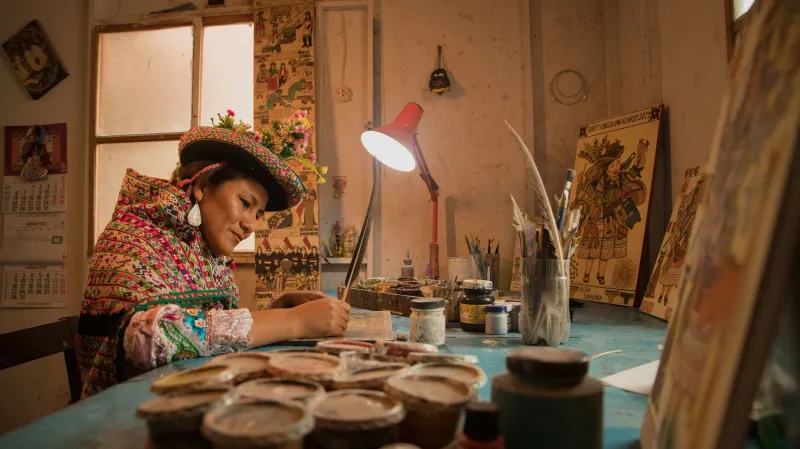
There is a particular kind of knowledge that cannot be tested, graded, or conferred by a diploma. It lives in the hands of a woman in her seventies who has spent six decades coaxing color from indigo plants, or in the callused fingers of a luthier who learned to read the grain of cedar wood before he learned to read a page. Across the United States and throughout Latin America, this knowledge — precise, empirical, and irreplaceable — has been accumulating for generations inside family workshops and informal apprenticeships that formal academic institutions have largely refused to acknowledge.
The question of why that exclusion happened is not a simple one. The answer implicates race, class, the colonial organization of intellectual labor, and a long-standing Western tendency to draw a hard line between "art" and "craft" — a distinction that has never made much sense within Latin American aesthetic traditions, and has cost the broader cultural world dearly.
The Knowledge That Institutions Couldn't Categorize
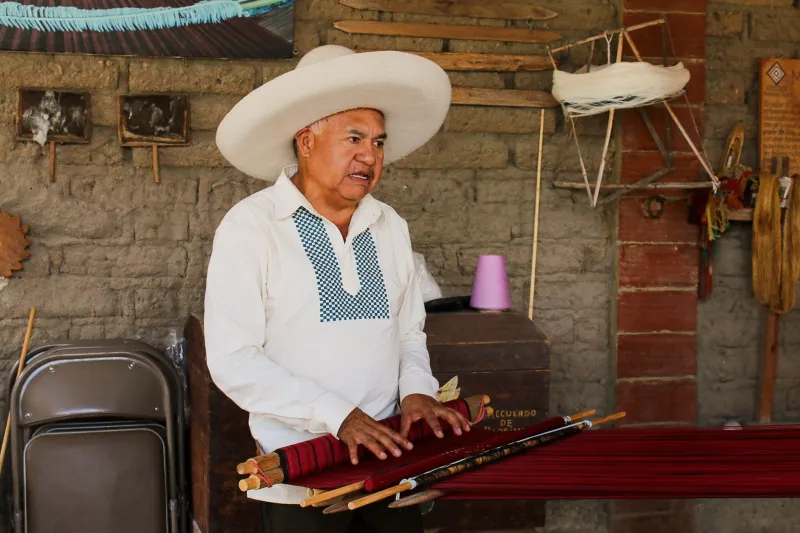
When researchers from cultural preservation organizations began conducting field interviews with traditional craftspeople in the early 2000s, they encountered a consistent pattern: practitioners whose technical sophistication rivaled — and in many cases exceeded — that of formally trained specialists in chemistry, acoustics, and materials science. A master weaver from Teotitlán del Valle, for instance, could describe with remarkable precision how altitude, water mineral content, and fermentation time affected the molecular bonding of natural dyes to wool fiber. She had never taken a chemistry course. She had learned by doing, under the guidance of her mother, who had learned from hers.
The problem was never a lack of rigor. The problem was a lack of institutional legibility. Academic systems built to validate knowledge through peer-reviewed publication and credentialed instruction had no framework for recognizing what these artisans possessed. And so, for most of the twentieth century, their expertise was classified as "folk practice" — a term that, however affectionately intended, functioned in practice as a mechanism for exclusion.
Underground Networks With Deep Roots
In the absence of institutional support, Latin American craftspeople in the United States built their own transmission systems — and those systems proved remarkably durable. In cities like Chicago, San Antonio, and Los Angeles, master artisans established informal workshops that operated on apprenticeship models predating the colonial era. Students, often family members or community neighbors, committed to years of close observation and graduated participation before being entrusted with the full scope of a technique.
These arrangements were not simply pedagogical. They were also acts of cultural sovereignty. To teach a child how to prepare a natural mordant for textile dyeing, or how to select and cure the wood for a traditional charango, was to assert that this knowledge belonged to the community — not to a university, not to a museum, and certainly not to a corporation seeking to patent or commercialize it.
The Rigo Camerano Cultural Foundation has documented several such networks in operation across the American Southwest and Southeast, and what becomes immediately apparent is how deliberately structured they are. Contrary to the romantic image of artisanal knowledge as purely intuitive, these mentorship systems involve explicit instruction, systematic correction, and a clear progression of competencies. They are, in every meaningful sense, curricula — simply ones that universities never bothered to write down.
The Scramble to Document What Almost Disappeared
The urgency around documentation has intensified considerably over the past decade, as a generation of master craftspeople has begun to age out of active practice. Cultural institutions that spent the better part of a century dismissing these knowledge systems are now funding emergency oral history projects, video documentation initiatives, and ethnographic partnerships — often in collaboration with the very community organizations that kept these traditions alive without any institutional backing whatsoever.
The irony is not lost on the practitioners themselves. "They ignored us for fifty years," one master instrument-maker based in New Mexico remarked during a recent archival interview. "Now they want to film everything. They want to put it in a database." His ambivalence reflects a tension that runs through the entire preservation conversation: the risk that documentation becomes its own form of extraction, capturing the surface of a knowledge system while leaving its living transmission network behind.
This is precisely why the most thoughtful preservation efforts are not simply recording what craftspeople know, but actively supporting the apprenticeship structures through which that knowledge moves. Grants that fund a master artisan to take on a new apprentice for two years accomplish something that no archival video can replicate. They keep the knowledge alive in a body, in a relationship, in the corrective gesture of one hand guiding another.
Redefining Intellectual Authority
Perhaps the most consequential shift underway is a conceptual one. Slowly, and with considerable resistance from entrenched academic quarters, the field of cultural heritage is beginning to recognize traditional craft knowledge as a form of intellectual authority that deserves the same institutional respect accorded to peer-reviewed scholarship.
Several universities in the United States have begun experimenting with formal recognition pathways for master craftspeople — not asking them to earn degrees, but acknowledging their expertise through adjunct appointments, artist residencies, and collaborative research partnerships. These arrangements remain imperfect and sometimes uncomfortably asymmetrical, but they represent a meaningful departure from the century-long practice of treating craft knowledge as raw material for academic study rather than as scholarship in its own right.
Organizations like the Rigo Camerano Cultural Foundation have argued consistently that this shift must go further. True parity requires not only that universities invite master craftspeople through their doors, but that institutions reorganize their own assumptions about what knowledge looks like, how it is validated, and whose expertise counts. A woman who has spent four decades perfecting the acoustic properties of a handmade drum is not a "folk artist" supplementing academic understanding. She is the primary authority on her subject — and any institution that cannot recognize that has a curriculum problem of its own.
A Living Archive in Motion
What the most resilient of these knowledge systems share is their refusal to become static. The best apprenticeship networks are not preservation projects in the conventional sense — they are not trying to freeze a practice at a particular historical moment. They are transmitting a capacity for adaptation, for reading new materials and new contexts through the lens of deep traditional understanding.
A master dyer who learned her technique in the highlands of Guatemala and now practices in suburban Atlanta has not simply transplanted a fixed method. She has translated it — finding local plant sources, adjusting for water chemistry, teaching students who bring their own cultural backgrounds to the work. The knowledge she passes on is alive in the way that only living transmission can ensure.
This, ultimately, is what formal institutions cannot replicate and cannot afford to ignore: the difference between a technique recorded and a technique practiced, between a tradition archived and a tradition inhabited. The invisible curriculum of Latin American master craftspeople is not invisible because it is hidden. It is invisible because most institutions have never learned how to see it. That is beginning to change — and the craftspeople themselves, who kept these systems running without recognition or resources, deserve the fullest credit for ensuring there was still something left to see.